Home > Ganpati Temples > Shrimant Dagdusheth Halwai Ganpati Temple
Shrimant Dagdusheth Halwai Ganpati Temple
Pune, Maharashtra
Dagdusheth Halwai Ganpati Temple is in the centre of Pune city. It was founded in 1893 by a sweet shop owner after the death of his son, and later became linked with the public Ganeshotsav started by Lokmanya Tilak.
Shrimant Dagdusheth Halwai Ganpati Temple offers a daily live darshan stream on the temple trust's official live camera feed. Timings of the live feed follow the temple's own schedule and may occasionally be paused during maintenance or special events.
Source: Official Shrimant Dagdusheth Halwai Ganpati Trust live darshan page
| Deity | Ganesha, 7.5 feet gold-ornamented idol |
| Location | Pune, Maharashtra |
| Built / Origin | 1893 CE |
| Timings | Open daily from 5:00 AM to 10:30 PM (till about 11:00 PM on Tuesdays). Suprabhatam Aarti 7:30 to 7:45 AM, Naivedyam 1:30 to 1:45 PM, Madhyana Aarti 3:00 to 3:15 PM, MahaMangal Aarti 8:00 to 9:00 PM, Shej Aarti (closing) around 10:30 PM. |
| Entry Fee | Free entry, no darshan ticket required. |
| VIP / Special Darshan | There is no separate paid VIP darshan lane here. The temple has an open glass facade so devotees get a clear view of the idol even from outside, which keeps the general queue moving without long waits on most days. |
| Nearest Airport | Pune International Airport, about 11 to 12 kilometres away. |
| Nearest Railway Station | Pune Junction railway station, about 2 to 4 kilometres away, well connected to Mumbai, Delhi, Chennai, Kolkata, Hyderabad and Bengaluru. |
About This Temple
This temple has one of the most recognised and grandly decorated Ganesha idols in India. During the ten days of Ganeshotsav, it is one of the most visited pandals in the country, drawing devotees from every state.
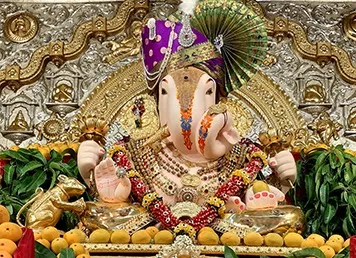
History and Puranic Background
Dagdusheth Halwai was a well known sweet maker of Pune in the late nineteenth century. He and his wife Lakshmibai lost their only son to a plague epidemic that struck the city. Deeply grieved, their spiritual guide advised them to build a temple for Lord Ganesha and a Datta temple, and to see all children of the city as their own.
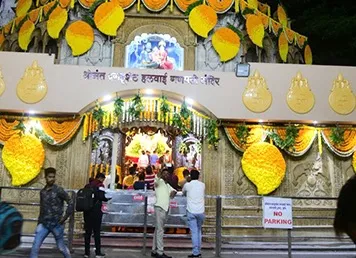
Dagdusheth first installed a private Ganesha idol in his home in 1893. In the same period, the freedom fighter and social reformer Lokmanya Bal Gangadhar Tilak was working to bring people of all castes and classes together to resist British rule. Tilak encouraged public celebration of Ganesh Chaturthi as a way to unite society, since gatherings for religious festivals were allowed while political gatherings were restricted. Dagdusheth's Ganesha became one of the earliest idols to be part of this public festival tradition, and the temple has carried that legacy forward ever since.
While no Puranic legend gave rise to this shrine, the spirit behind its founding, community service, generosity, and turning personal grief into public good, mirrors exactly the qualities for which Ganesha is worshipped as remover of obstacles and protector of the collective good.
ॐ एकदन्ताय विद्महे वक्रतुण्डाय धीमहि । तन्नो दन्तिः प्रचोदयात् ॥
Om Ekadantaya Vidmahe Vakratundaya Dhimahi, Tanno Dantih Prachodayat.
Meaning: We seek to know the One-Tusked Lord. We meditate on the One with the curved trunk. May that Tusked God guide our understanding.
Source: Ganapati Atharvashirsha Upanishad, the principal Upanishad dedicated to Lord Ganesha. This Gayatri verse is recited daily by devotees before Ganesha worship across India.
Why Devotees Visit
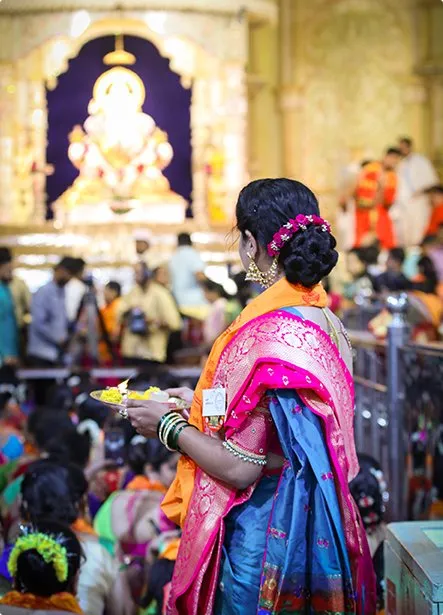
The temple is central to Pune's Ganeshotsav processions and is often the first stop for the immersion procession on the final day of the festival.
How to Reach
By Air: Pune International Airport, about 11 to 12 kilometres away.
By Train: Pune Junction railway station, about 2 to 4 kilometres away, well connected to Mumbai, Delhi, Chennai, Kolkata, Hyderabad and Bengaluru.
By Road: Located in Budhwar Peth in central Pune, reachable by city buses (routes such as 11, 21, 144 and others stop near Vasant Talkies), autos and taxis.
Pooja and Rituals
- Suprabhatam, the morning waking prayer
- Daily Abhishek, ceremonial bathing of the idol
- Naivedyam, the offering of food to the deity
- MahaMangal Aarti, the grand evening prayer with lamps
- Atharvashirsha recitation, a mass chanting event held on the fourth day of Ganeshotsav
VIP Darshan
There isn't a dedicated paid VIP lane at Dagdusheth Halwai. Instead, the temple's open glass front lets devotees see the idol clearly even from the street, which keeps the regular queue moving on most days.
Travel Tips
- Located near Shreemant Bhausaheb Rangari Ganpati Trust and Budhwar Peth, close to Pune railway station.
- Visiting between festival days brings very heavy crowds, plan a weekday morning visit for a calmer darshan.
- Nearby Kesari Wada, associated with Tilak, is worth a short visit for elders interested in freedom movement history.
Frequently Asked Questions
What are the Dagdusheth Halwai Ganpati timings?
The temple is open daily from about 5:00 AM to 10:30 PM, with slightly extended hours on Tuesdays.
Is VIP darshan available at Dagdusheth Halwai temple?
There is no separate paid VIP darshan counter. The temple's open facade allows a clear view of the idol from outside, which usually keeps queues moving.
How far is Dagdusheth Ganpati from Pune railway station?
It is about 2 to 4 kilometres from Pune Junction, a short auto-rickshaw or taxi ride away.
Why is Dagdusheth Halwai Ganpati Temple famous?
It was founded in 1893 after the founder's personal loss and became linked with Lokmanya Tilak's public Ganeshotsav movement, making it one of the most significant Ganesh temples in the freedom-era history of public festivals.
What is the best time to visit Dagdusheth Ganpati temple?
Early morning around 6 to 9 AM or evening around 6 to 8:30 PM, avoiding festival days, gives a calmer darshan experience.
Previous Temple: Shree Siddhivinayak Temple, Prabhadevi
Next Temple: Shree Swayambhu Ganpati Temple, Ganpatipule
Back to Hub: Top 20 Ganpati Temples of India (Beyond Ashtavinayak)
Explore More Ganpati Temples of India
Continue exploring more sacred Ganpati shrines across India:
- Top 20 Ganpati Temples of India (Beyond Ashtavinayak): Complete Guide
- Siddhivinayak Temple, Mumbai: History & Darshan
- Ganpatipule: The West-Facing Swayambhu Ganesha
- Kasba Ganpati Temple, Pune: Maanacha Pahila & Gramadevata Since 1636
- Siddhivinayak Mahaganapati Temple, Titwala: Ganpati Temple for Marriage Blessings
- Trishunda Ganapati Temple, Pune: A Rare 3-Trunked Ganpati Shrine
- Kanipakam Ganpati Temple: Swayambhu Sri Varasiddhi Vinayaka Swamy Vari Devasthanam
- Ucchi Pillayar Temple, Rockfort Trichy: Ganpati Shrine on a Hilltop
- Karpaka Vinayakar Temple, Pillayarpatti: Ganpati Cave Shrine Since the Pandya Era
- Manakula Vinayagar Temple, Puducherry: Ganpati Shrine that Survived French Rule
- Anegudde Vinayaka Temple, Kumbhashi: A Ganpati Mukti Sthala
- Idagunji Mahaganapati Temple: A 1500-Year Ganpati Shrine, Honnavar
- Kadalekalu & Sasivekalu Ganesha, Hampi: Two Ganpati Monoliths
- Sree Mahaganapathy Temple, Kottarakkara: A Kerala Ganpati Shrine
- Pazhavangadi Ganapathy Temple: Trivandrum's Famous Ganpati Shrine
- Trinetra Ganesh Temple, Ranthambore Fort: The 3-Eyed Ganpati Shrine
- Moti Dungri Ganesh Temple, Jaipur: The 1761 Royal Ganpati Shrine
- Dhundiraj Vinayak Temple, Kashi: Chief of the 56 Ganpati Shrines
- Chintaman Ganesh Temple, Ujjain: The Ganpati Shrine that Removes Worry
- Khajrana Ganesh Temple, Indore: The Buried & Reborn Ganpati Shrine