Home > Ganpati Temples > Shree Swayambhu Ganpati Temple, Ganpatipule
Shree Swayambhu Ganpati Temple, Ganpatipule
Ratnagiri, Maharashtra
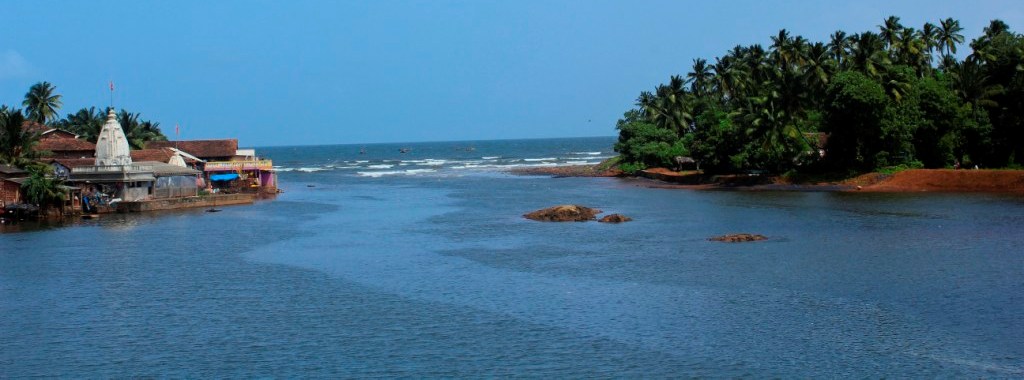
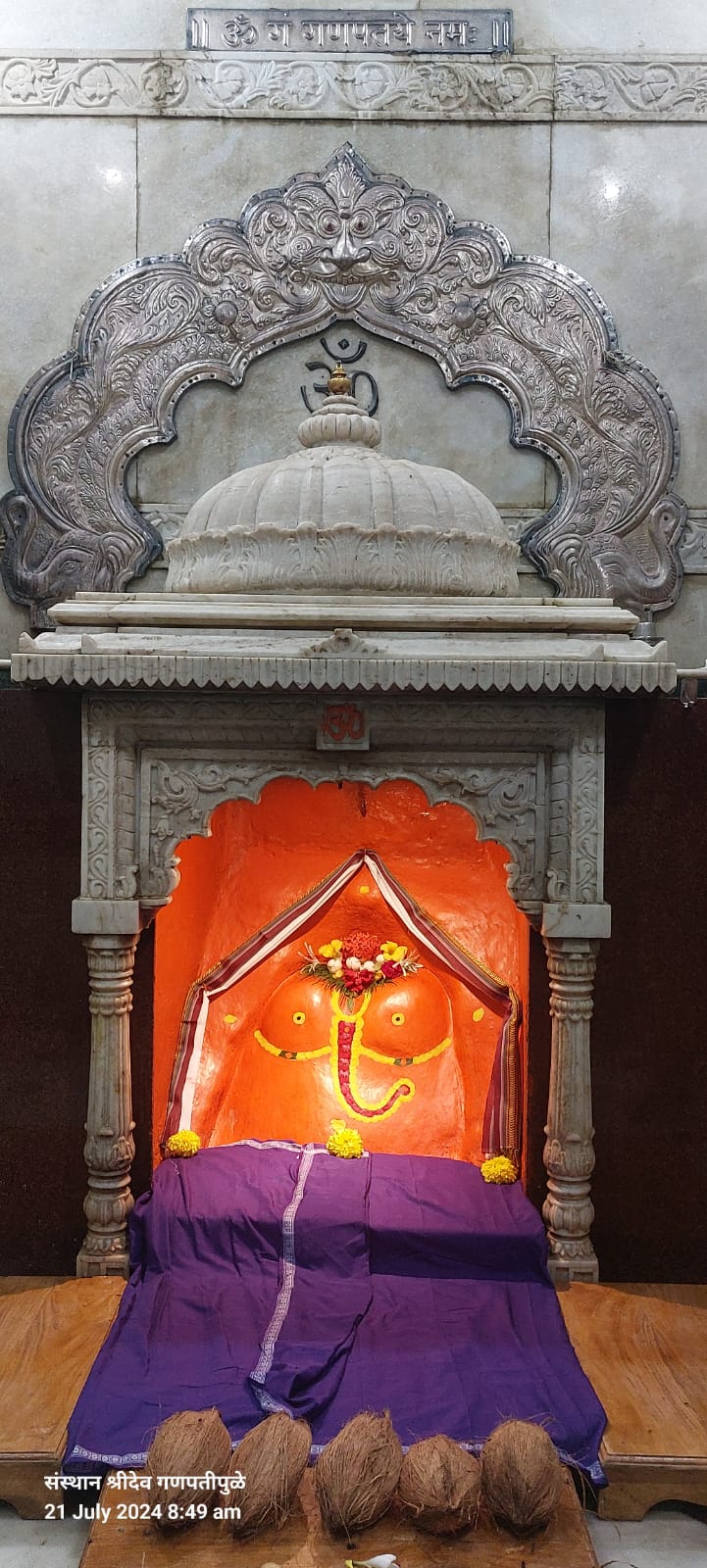
The Ganpatipule temple sits on the Konkan coast in Ratnagiri district. The idol here is believed to be swayambhu, or self manifest, and faces west, which is unusual for Hindu temples.
| Deity | Swayambhu (self-manifest) Ganesha, west facing, about 400 years old |
| Location | Ratnagiri, Maharashtra |
| Built / Origin | Believed to be around 400 years old; exact founding year not documented |
| Timings | Open daily from about 5:00 AM to 9:00 PM. |
| Entry Fee | Free entry. |
| VIP / Special Darshan | No separate VIP darshan counter is documented for this temple. Darshan follows a single queue that moves briskly outside festival season. |
| Nearest Airport | Kolhapur Airport is the nearest regional airport; Chhatrapati Shivaji Maharaj International Airport, Mumbai, is the nearest major airport, about 375 kilometres away. |
| Nearest Railway Station | Ratnagiri railway station on the Konkan Railway line, about 25 kilometres away. |
Live Darshan
There is currently no official 24x7 live darshan video stream available for the Ganpatipule temple. In the meantime, here are two video glimpses of the temple and its surroundings:
About This Temple
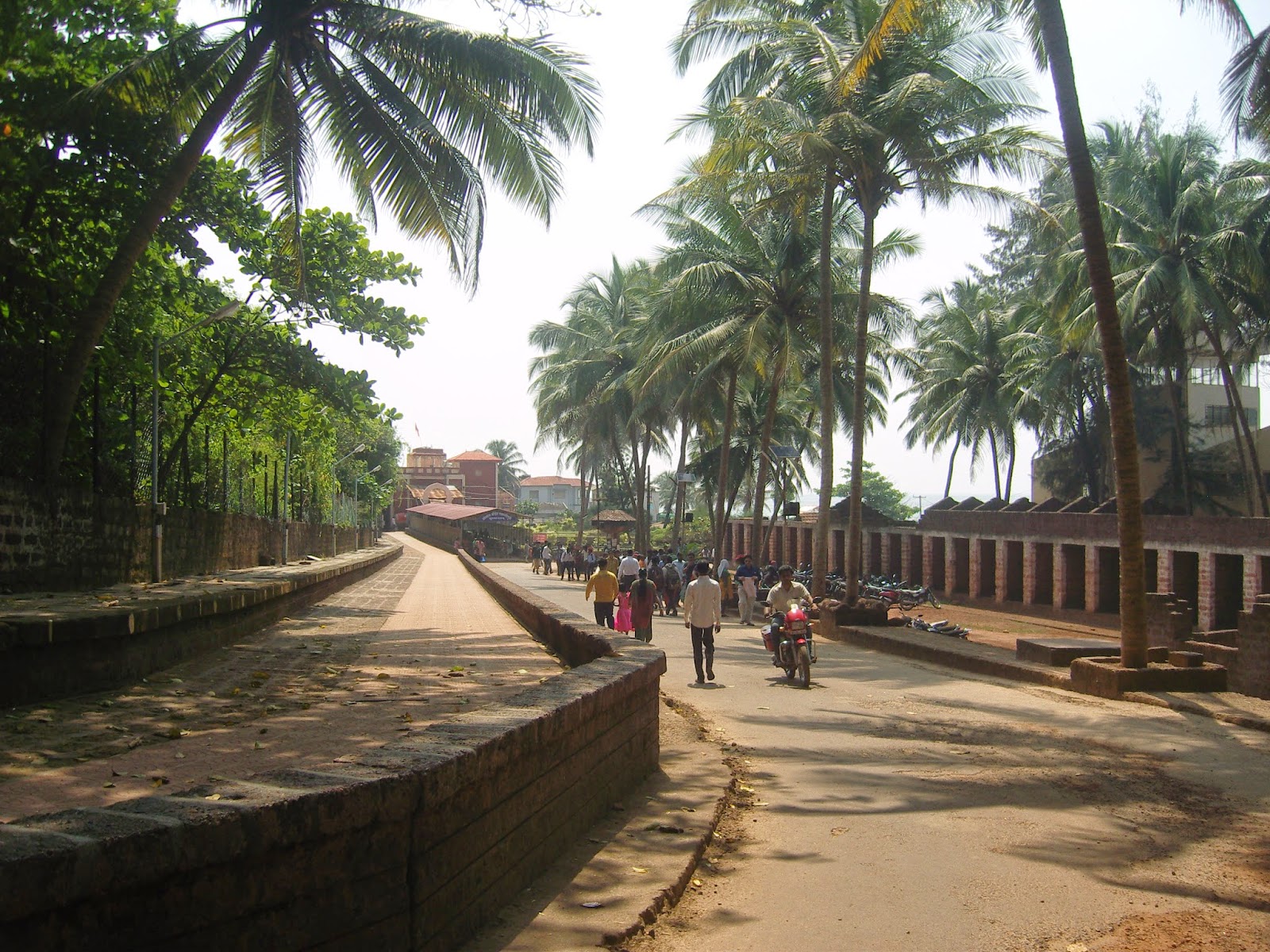
This temple sits at the base of a small hillock right beside the Arabian Sea. Devotees walk a full circle around the hill as their form of pradakshina, instead of walking around the temple alone.
History and Puranic Background
According to local temple tradition, a cowherd once noticed that his cow stopped giving milk at home but would release its milk on its own at one particular spot near the sand dunes of this coast. When the villagers dug at that spot, they found a natural stone formation resembling Lord Ganesha. Since it was found near the sand dune, called pool or pule in the local Marathi dialect, the place and temple came to be known as Ganpatipule.
The idol here faces west, while most Hindu temple idols face east. Local belief holds that Ganesha faces the sea in this direction to protect the villages of the Western Ghats and the coast, earning him the title Paschim Dwarpalak, meaning the guardian of the western gate.
This is a site shaped by long-standing local devotion rather than a shrine described in a specific chapter of the eighteen Mahapuranas. Still, its central idea, that Ganesha is swayambhu and reveals himself wherever he chooses, echoes the broader Puranic tradition in which several forms of Ganesha are described as self-manifest and not made by human hands.
वक्रतुण्ड महाकाय सूर्यकोटिसमप्रभ । निर्विघ्नं कुरु मे देव सर्वकार्येषु सर्वदा ॥
Vakratunda Mahakaya Suryakoti Samaprabha, Nirvighnam Kuru Me Deva Sarva Karyeshu Sarvada.
Meaning: O Lord with the curved trunk and mighty body, whose light equals a crore of suns, kindly make all my undertakings free of obstacles, always.
Source: A traditional invocation verse from the Ganesha Purana tradition, recited before starting any auspicious task. It is one of the most widely known Ganesha slokas in India.
Why Devotees Visit
Devotees performing the hill pradakshina often do so barefoot as a mark of devotion, and the temple is a peaceful coastal pilgrimage stop.
How to Reach
By Air: Kolhapur Airport is the nearest regional airport; Chhatrapati Shivaji Maharaj International Airport, Mumbai, is the nearest major airport, about 375 kilometres away.
By Train: Ratnagiri railway station on the Konkan Railway line, about 25 kilometres away.
By Road: Well connected by Maharashtra state transport buses from Mumbai, Pune, Ratnagiri and Kolhapur; taxis are available from Ratnagiri town.
Pooja and Rituals
- Daily morning and evening Aarti
- Hill Pradakshina, the devotee's circumambulation walk around the hillock instead of the sanctum alone
- Special abhishekam bookings available through the temple trust for personal poojas
- Modak and coconut offerings, the customary prasad for Ganesha here
VIP Darshan
This shrine has no dedicated VIP darshan counter on record. A single queue handles the flow of visitors and moves at a steady pace outside the festival rush.
Travel Tips
- Nearest railway station is Ratnagiri, about 25 kilometres away.
- The beach beside the temple can get slippery, elderly visitors should use the paved pradakshina path.
- Morning visits avoid the afternoon coastal heat.
Frequently Asked Questions
What are the Ganpatipule temple timings?
The temple is open daily from about 5:00 AM to 9:00 PM.
Why does the Ganpatipule idol face west?
Most Hindu temple idols face east, but local belief holds that Ganesha faces west here to guard the villages of the Western Ghats and the coast, earning him the title Paschim Dwarpalak.
How do I reach Ganpatipule temple by train?
The nearest railway station is Ratnagiri on the Konkan Railway line, about 25 kilometres from the temple, from where taxis and buses are available.
Is entry free at Ganpatipule temple?
Yes, darshan is free for all devotees.
What is unique about the Ganpatipule pradakshina?
Because the temple sits at the base of a hillock by the sea, devotees walk a full circle around the hill as their pradakshina, instead of walking around the temple alone.
Previous Temple: Shrimant Dagdusheth Halwai Ganpati Temple
Next Temple: Shree Kasba Ganpati Temple
Back to Hub: Top 20 Ganpati Temples of India (Beyond Ashtavinayak)
Explore More Ganpati Temples of India
Continue exploring more sacred Ganpati shrines across India:
- Top 20 Ganpati Temples of India (Beyond Ashtavinayak): Complete Guide
- Siddhivinayak Temple, Mumbai: History & Darshan
- Dagdusheth Halwai Ganpati, Pune: 1893 Origins
- Kasba Ganpati Temple, Pune: Maanacha Pahila & Gramadevata Since 1636
- Siddhivinayak Mahaganapati Temple, Titwala: Ganpati Temple for Marriage Blessings
- Trishunda Ganapati Temple, Pune: A Rare 3-Trunked Ganpati Shrine
- Kanipakam Ganpati Temple: Swayambhu Sri Varasiddhi Vinayaka Swamy Vari Devasthanam
- Ucchi Pillayar Temple, Rockfort Trichy: Ganpati Shrine on a Hilltop
- Karpaka Vinayakar Temple, Pillayarpatti: Ganpati Cave Shrine Since the Pandya Era
- Manakula Vinayagar Temple, Puducherry: Ganpati Shrine that Survived French Rule
- Anegudde Vinayaka Temple, Kumbhashi: A Ganpati Mukti Sthala
- Idagunji Mahaganapati Temple: A 1500-Year Ganpati Shrine, Honnavar
- Kadalekalu & Sasivekalu Ganesha, Hampi: Two Ganpati Monoliths
- Sree Mahaganapathy Temple, Kottarakkara: A Kerala Ganpati Shrine
- Pazhavangadi Ganapathy Temple: Trivandrum's Famous Ganpati Shrine
- Trinetra Ganesh Temple, Ranthambore Fort: The 3-Eyed Ganpati Shrine
- Moti Dungri Ganesh Temple, Jaipur: The 1761 Royal Ganpati Shrine
- Dhundiraj Vinayak Temple, Kashi: Chief of the 56 Ganpati Shrines
- Chintaman Ganesh Temple, Ujjain: The Ganpati Shrine that Removes Worry
- Khajrana Ganesh Temple, Indore: The Buried & Reborn Ganpati Shrine