Home > Ganpati Temples > Shree Varasiddhi Vinayaka Temple, Kanipakam
Shree Varasiddhi Vinayaka Temple, Kanipakam
Chittoor district, Andhra Pradesh
Kanipakam temple is in Chittoor district of Andhra Pradesh. It is famous for its swayambhu idol that devotees believe grows larger every year, and for its old tradition of taking oaths of truth before the deity.
| Deity | Varasiddhi Vinayaka (Ganesha), swayambhu idol seated in a well, believed to be growing in size |
| Location | Chittoor district, Andhra Pradesh |
| Built / Origin | 11th century CE (Chola period), expanded in 1336 CE (Vijayanagara period) |
| Timings | Temple opens around 4:00 AM and closes around 9:30 PM to 10:00 PM daily. Darshan generally runs 6:00 AM to 1:00 PM and 4:00 PM to 8:00 PM, though some sources list the temple as open continuously through the day; timing can vary by season, so checking the temple's official schedule before travel is recommended. |
| Entry Fee | Free general darshan. Paid Special Darshan tickets are available, commonly priced around Rs. 100 to Rs. 500 depending on the category. |
| VIP / Special Darshan | Yes. Kanipakam offers paid Special Darshan tickets for a faster queue, along with an Ekantha Seva and specific Arjitha Sevas that require advance booking and a dress code. |
| Nearest Airport | Tirupati Airport, about 70 to 80 kilometres away, with regular domestic flights. |
| Nearest Railway Station | Chittoor railway station, about 11 to 13 kilometres away, connected to Chennai, Bengaluru and Hyderabad. |
Live Darshan
There is no official live darshan stream running at Kanipakam right now, but you can check the temple's official YouTube streams page for the latest live broadcasts. In the meantime, here is a walkthrough video of the temple:
About This Temple
This temple was built by the Chola king Kulothunga I in the eleventh century and later expanded by Vijayanagara rulers. It stands beside the Bahuda river.

History and Puranic Background
According to the sthala purana, the local temple legend of the place, three brothers who were born mute, deaf and blind once cultivated a small piece of land together near a village then called Viharipuri. When the well they used for irrigation dried up, one brother dug deeper into the ground and struck a stone with his tool. Blood began to flow from the stone, and as it touched the three brothers, all of them were freed from their disabilities.
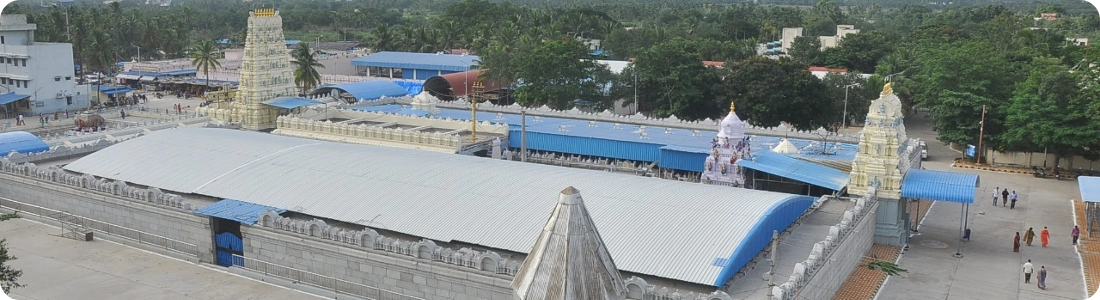
Villagers gathered at the well and tried to dig further to see the source of this wonder, but could not find the base of the stone. It was found to be a swayambhu idol of Lord Ganesha, seated within a well that still holds water today. The name Kanipakam itself is said to come from old Tamil and Telugu words describing the flow of water into fertile wetland, connected to this well.
Over centuries, the idol has been observed to gradually increase in size, a phenomenon devotees see as a living sign of divine presence. Because of the miracle of the three brothers regaining their senses through truth and divine grace, a strong local custom developed of settling disputes by having both sides take an oath before this Ganesha, believing that whoever speaks falsely will face consequences.
This sthala purana belongs to regional temple tradition rather than the eighteen Mahapuranas, yet it echoes the same themes found throughout Puranic literature, where sacred water, self-manifest idols and divine justice recur again and again.
सुमुखश्चैकदन्तश्च कपिलो गजकर्णकः । लम्बोदरश्च विकटो विघ्ननाशो गणाधिपः ॥
हेरम्बश्च तथा स्कन्दपूर्वजो भालचन्द्रमाः । गजाननो द्वादशैतानि नामानि यः पठेत् शृणुयादपि ॥
Sumukhaschaikadantascha kapilo gajakarnakah, Lambodarascha vikato vighnanasho ganadhipah, Herambascha tatha skandapurvajo bhalachandramah, Gajanano dvadashaitani namani yah pathet shrunuyadapi.
Meaning: Sumukha, Ekadanta, Kapila, Gajakarnaka, Lambodara, Vikata, Vighnanasha, Ganadhipa, Heramba, Skandapurvaja, Bhalachandra and Gajanana - these are the twelve names. One who reads or hears them faces no obstacle in any work.
Source: A traditional twelve-name (Dwadashanama) Ganesha stotra used across India before starting any important task. It appears in Puranic worship tradition and in the Mahabharata's invocation verses.
Why Devotees Visit
People from across South India travel here specifically to resolve disputes or make solemn promises before the deity, a practice still respected in local courts informally.
How to Reach
By Air: Tirupati Airport, about 70 to 80 kilometres away, with regular domestic flights.
By Train: Chittoor railway station, about 11 to 13 kilometres away, connected to Chennai, Bengaluru and Hyderabad.
By Road: APSRTC buses run directly from Tirupati (about 70 km) and Chittoor (about 12 km); the temple is also reachable via NH140.
Pooja and Rituals
- Suprabhatham, the pre-dawn waking prayer
- Bindu Theertha Abhishekam, the sacred water bathing ritual at dawn
- Ksheerabhishekam, bathing the deity with milk, performed in the evening
- Unjal Seva, the cradle worship ritual
- Ganapathi Homam, a sacred fire ritual for removing obstacles
- Pavalimpu Seva, the closing night ritual
- Pramanam, the local custom of taking a truth oath before the deity to settle disputes
VIP Darshan
Kanipakam does provide paid Special Darshan tickets for a quicker queue, plus an Ekantha Seva and select Arjitha Sevas that need advance booking and a prescribed dress code.
Travel Tips
- About 70 kilometres from Tirupati and 12 kilometres from Chittoor town.
- The 21 day Brahmotsavam festival in Bhadrapada month draws large crowds, plan accordingly.
- Free meals, annadanam, are offered to pilgrims through the day.
Frequently Asked Questions
What are the Kanipakam temple timings?
The temple generally opens around 4:00 AM and closes around 9:30 to 10:00 PM daily, though exact darshan windows can vary, so checking before travel is wise.
Is VIP or Special Darshan available at Kanipakam?
Yes, paid Special Darshan tickets are available at the temple counter for a quicker queue, along with bookable Arjitha Sevas.
How do I reach Kanipakam temple from Tirupati?
Kanipakam is about 70 to 80 kilometres from Tirupati, reachable by APSRTC bus or taxi in around 1.5 to 2 hours.
Why is the Kanipakam idol believed to be growing?
Devotees point to the fact that a silver armour offered to the deity decades ago no longer fits the idol, which they see as a sign that the swayambhu idol is gradually increasing in size.
What is the Pramanam custom at Kanipakam?
It is a long-standing local practice where two parties in a dispute take an oath of truth before the deity, believing that whoever speaks falsely will face consequences.
Previous Temple: Shree Siddhivinayak Mahaganapati Temple, Titwala
Next Temple: Shree Ucchi Pillayar Temple, Rockfort
Back to Hub: Top 20 Ganpati Temples of India (Beyond Ashtavinayak)
Explore More Ganpati Temples of India
Continue exploring more sacred Ganpati shrines across India:
- Top 20 Ganpati Temples of India (Beyond Ashtavinayak): Complete Guide
- Siddhivinayak Temple, Mumbai: History & Darshan
- Dagdusheth Halwai Ganpati, Pune: 1893 Origins
- Ganpatipule: The West-Facing Swayambhu Ganesha
- Kasba Ganpati Temple, Pune: Maanacha Pahila & Gramadevata Since 1636
- Siddhivinayak Mahaganapati Temple, Titwala: Ganpati Temple for Marriage Blessings
- Trishunda Ganapati Temple, Pune: A Rare 3-Trunked Ganpati Shrine
- Ucchi Pillayar Temple, Rockfort Trichy: Ganpati Shrine on a Hilltop
- Karpaka Vinayakar Temple, Pillayarpatti: Ganpati Cave Shrine Since the Pandya Era
- Manakula Vinayagar Temple, Puducherry: Ganpati Shrine that Survived French Rule
- Anegudde Vinayaka Temple, Kumbhashi: A Ganpati Mukti Sthala
- Idagunji Mahaganapati Temple: A 1500-Year Ganpati Shrine, Honnavar
- Kadalekalu & Sasivekalu Ganesha, Hampi: Two Ganpati Monoliths
- Sree Mahaganapathy Temple, Kottarakkara: A Kerala Ganpati Shrine
- Pazhavangadi Ganapathy Temple: Trivandrum's Famous Ganpati Shrine
- Trinetra Ganesh Temple, Ranthambore Fort: The 3-Eyed Ganpati Shrine
- Moti Dungri Ganesh Temple, Jaipur: The 1761 Royal Ganpati Shrine
- Dhundiraj Vinayak Temple, Kashi: Chief of the 56 Ganpati Shrines
- Chintaman Ganesh Temple, Ujjain: The Ganpati Shrine that Removes Worry
- Khajrana Ganesh Temple, Indore: The Buried & Reborn Ganpati Shrine